















Close
SATEXPO 2026
Friday, February 20, 2026
CABSAT 2026

Samsung to elevate smart homes with GenAI-powered Bixby

Note* - All images used are for editorial and illustrative purposes only and may not originate from the original news provider or associated company.

Subscribe

- Never miss a story with notifications

- Gain full access to our premium content

- Browse free from any location or device.

Media Packs

Expand Your Reach With Our Customized Solutions Empowering Your Campaigns To Maximize Your Reach & Drive Real Results!

– Access the Media Pack Now

– Book a Conference Call

Leave Message for Us to Get Back

Related stories

Enterprise IT Infrastructure for the AI Economy

The rapid ascent of artificial intelligence as the primary driver of corporate value is placing unprecedented demands on traditional data center and computing models. To thrive in the AI-centric economy, organizations must modernize their IT foundations, moving toward high-performance computing architectures and scalable cloud platforms that can handle the massive data volumes and intense processing requirements of modern machine learning workloads.

5G Advanced Networks Accelerating Enterprise IoT

The evolution of 5G into its "Advanced" phase represents a critical milestone for industrial connectivity, offering the reliability and precision required for mission-critical operations. By combining dedicated private networks with edge computing and high-density sensor arrays, enterprises can create a seamless digital nervous system that drives the next wave of smart factory innovation and autonomous logistics.

Cybersecurity Strategies for Hyperconnected Enterprises

As organizations expand their digital footprint across remote networks, cloud services, and thousands of IoT devices, the traditional concept of a secure perimeter has become entirely obsolete. To survive in this new era of hyperconnectivity, enterprises must adopt a holistic security posture that prioritizes continuous verification, AI-driven threat intelligence, and a culture of resilience that can withstand even the most sophisticated cyber attacks.

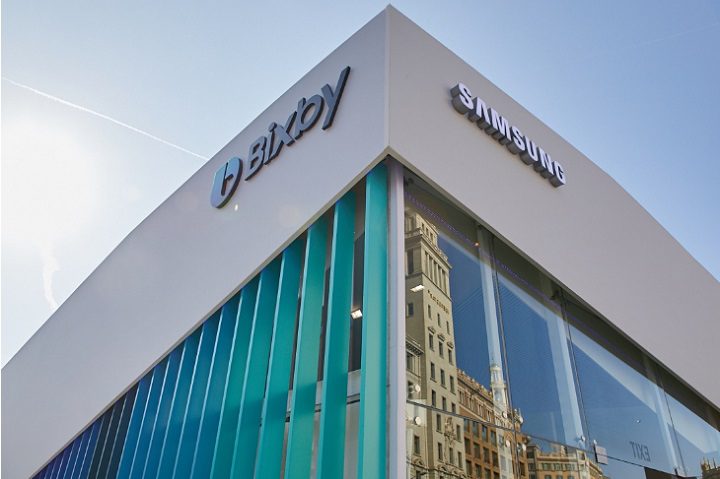
Samsung aims to elevate smart homes by revamping its AI-powered voice assistant Bixby with generative AI.

During its recent IFA 2023 press conference, Samsung unveiled its plans to breathe new life into Bixby by upgrading it with advanced generative AI capabilities that will feature in all future smart home appliances.

Generative AI – as seen in popular tools like ChatGPT, Dall-E, and Google Bard – enables systems to understand complex sentences and provide multifaceted responses. Unlike current-generation Bixby-powered devices, the enhanced Bixby will adeptly decipher intricate sentences with multiple meanings.

Initially, the upgraded Bixby is set to debut on Samsung’s smartphones and tablets.

Miyoung Yoo, VP of Samsung Electronics’ Home Appliances Division, said: “All of Samsung Electronics’ smart home appliances will feature AI capabilities, including water purifiers equipped with core AI functions.

“Our objective is to transcend mere connectivity and empower smart home appliances to deliver tailored solutions by recognising customers’ lifestyles and learning their patterns.”

Yoo envisions that future smart home appliances will evolve beyond basic functions, offering customised operations based on user behaviours and preferences. However, it’s important to note that this enhanced Bixby will not directly compete with heavyweight AI services like ChatGPT or Google Bard.

“While generative AI often brings to mind services like ChatGPT, we are not aiming for such heavyweight performance. Even if users don’t issue specific commands, Bixby will grasp the context of the conversation, facilitating more natural interactions,” added Yoo.

In addition to enhancing Bixby, Samsung is also introducing Tizen RT—a lightweight version of its Tizen OS that is purpose-built for smart home appliances.

Samsung’s Tizen OS already boasts an impressive user base, with over 15 million devices operating on it. This number is projected to reach 20 million by the end of the year.

The enhanced Bixby – along with Tizen RT integration – aims to transform smart homes into hubs of intelligence and convenience, where appliances understand and cater to user needs to create a truly connected and personalised living environment.

Further insights into the upcoming iterations of Bixby, Tizen, and Tizen RT may be unveiled during the Samsung Developer Conference 2023 event scheduled for 5 October 2023.

Latest stories

Related stories

Enterprise IT Infrastructure for the AI Economy

The rapid ascent of artificial intelligence as the primary driver of corporate value is placing unprecedented demands on traditional data center and computing models. To thrive in the AI-centric economy, organizations must modernize their IT foundations, moving toward high-performance computing architectures and scalable cloud platforms that can handle the massive data volumes and intense processing requirements of modern machine learning workloads.

5G Advanced Networks Accelerating Enterprise IoT

The evolution of 5G into its "Advanced" phase represents a critical milestone for industrial connectivity, offering the reliability and precision required for mission-critical operations. By combining dedicated private networks with edge computing and high-density sensor arrays, enterprises can create a seamless digital nervous system that drives the next wave of smart factory innovation and autonomous logistics.

Cybersecurity Strategies for Hyperconnected Enterprises

As organizations expand their digital footprint across remote networks, cloud services, and thousands of IoT devices, the traditional concept of a secure perimeter has become entirely obsolete. To survive in this new era of hyperconnectivity, enterprises must adopt a holistic security posture that prioritizes continuous verification, AI-driven threat intelligence, and a culture of resilience that can withstand even the most sophisticated cyber attacks.

Big Data Analytics Powering Smart Infrastructure

The transformation of our cities into intelligent, responsive environments is being driven by the marriage of physical engineering and massive-scale data processing. By harnessing the power of predictive analytics and real-time monitoring, urban planners can create resilient systems that optimize energy use, reduce traffic congestion, and ensure the structural longevity of public assets in an increasingly crowded world.

Subscribe

- Never miss a story with notifications

- Gain full access to our premium content

- Browse free from any location or device.

Media Packs

Expand Your Reach With Our Customized Solutions Empowering Your Campaigns To Maximize Your Reach & Drive Real Results!

– Access the Media Pack Now

– Book a Conference Call

Leave Message for Us to Get Back

Translate »